
I was seventeen years old, sitting in a psychologist’s office, terrified.
Two ACL reconstructions before I even graduated high school. The physical recovery was brutal, but the mental part? That was worse.
Every time I planted my foot to make a cut on the lacrosse field, I could feel it—that split second of doubt. Is my knee going to give out again?
Fear is a killer when you’re trying to perform at your best.
My Mom had a friend who was a sports psychologist. He was well known in the region and had worked with Olympic gold medalists teaching them mental performance techniques.
My Mom called him for me.
At first I was skeptical, but the decision to work with Dr. Bob changed everything.
Not just for my lacrosse career, but for my entire life.
What Dr. Bob Taught Me
Dr. Bob taught me a lot of things about myself and a bunch of psychology tools. Two of the major tools were: affirmations and visualization.
You hear a lot about visualization these days, but here’s what most people get wrong—it’s not magic out of the box, but it can do magical things.
Looking at a picture of a beach house and hoping it appears in your life doesn’t work.
What DOES work is what he taught me: You have to feel it as if it happened.
All five senses. Every single day.
The House I Visualized
Years later, I used this technique to visualize my dream house.
I found a picture of a view from a window overlooking the ocean. But here’s the weird part—you couldn’t see a beach. Just ocean because the house was on cliffs.
Growing up on the East Coast, this was strange to me. Every beach house I’d ever seen had a visible shoreline. But this picture spoke to me, so I used it.

This is the picture. No beach, just a view of the ocean.
Every single morning. I didn’t just look at that picture…
I imagined opening that door.
I could smell the salt air mixing with the cool breeze.
I could hear the waves crashing below.
I could feel the mist on my face.
I could hear the seabirds calling and the distant fog horn at night.
I spent time in that moment. Feeling the emotions of what it would be like to live there. The peace. The gratitude. The sense of achievement.
Three Days After My Exit
Three days after I sold my first company, I bought a house in Half Moon Bay, California.
When I walked into the kitchen and looked out the window, there it was—the Pacific Ocean stretching to the horizon.
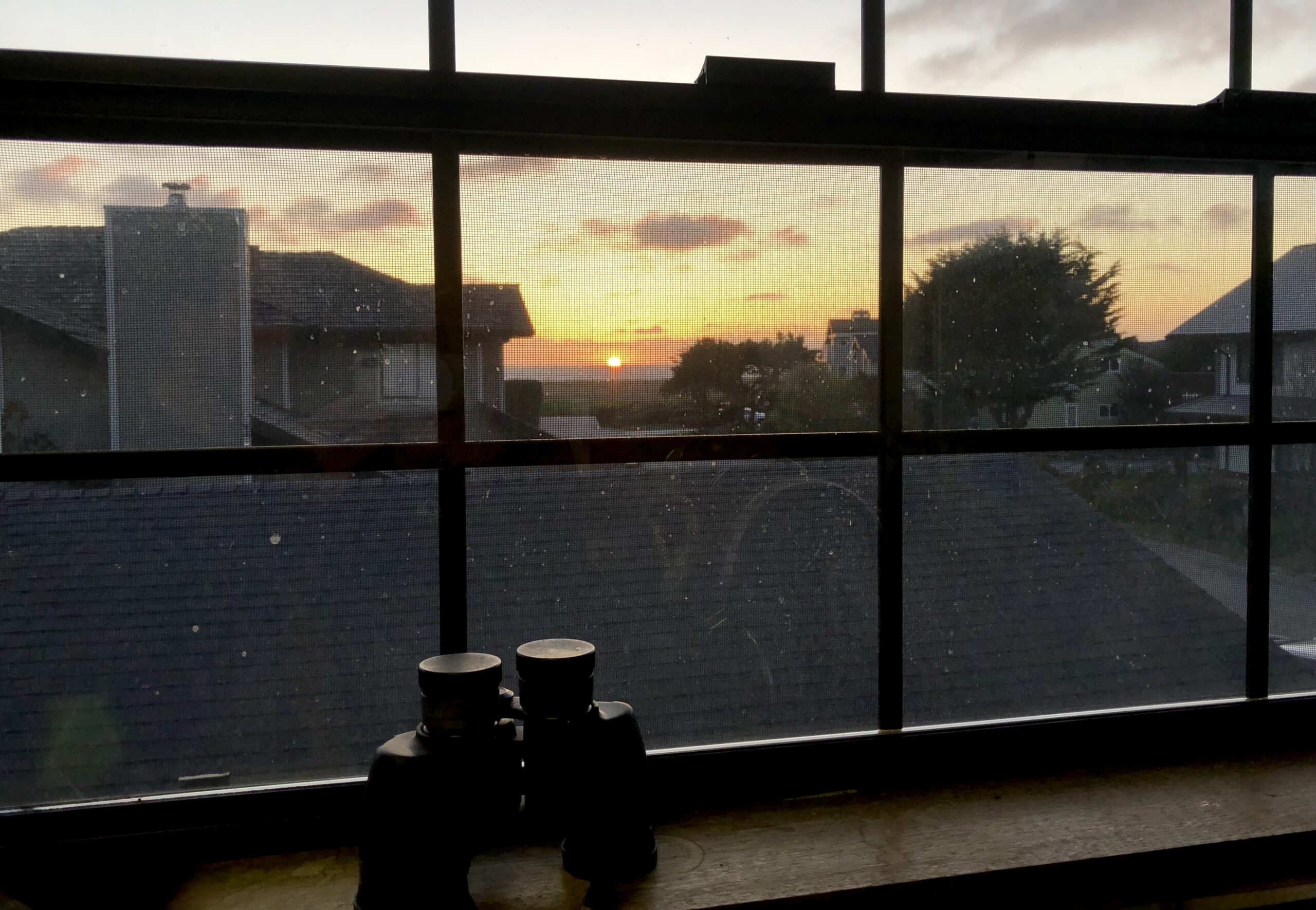
No beach, just ocean.
Pretty darn close to the view I’d been visualizing for over fifteen years. No beach because of the cliffs, cool breeze, fog horn at night, sounds of the waves crashing on the beach.
Coincidence? Maybe.
But I don’t think so.
The Science Behind Why This Works
Researchers at the Cleveland Clinic conducted a study where they had one group physically exercise their muscles while another group only imagined exercising those same muscles.
The group that only visualized increased their muscle strength by 13.5% without ever physically training.
Why does this work?
When you vividly imagine an experience, your brain activates many of the same neural pathways as when you actually experience it. Your brain essentially rehearses the future, making it more likely you’ll take the actions necessary to make it real.
But here’s the critical part most people miss: Generic visualization doesn’t work.
Looking at a vision board while feeling nothing won’t change your life.
The power comes from the emotional and sensory detail.
When you engage all five senses and feel the emotions of already having achieved your goal, your brain starts to believe it’s possible. Then it starts finding ways to make it happen.
How to Make Visualization Work for You
Here’s exactly how to use this technique:
1. Choose one specific goal Don’t try to visualize ten things at once. Pick one thing that really matters to start. Don’t worry once you get good at it you can do a few visualizations for a few different goals you have.
2. Find a picture that is close to what you’re shooting for It doesn’t have to be exact, but close to what your goal is.
3. Engage all five senses What do you see? Hear? Smell? Feel physically? Taste? The more sensory detail, the better. Be there feeling being in that place or achieving that goal.
4. Feel the emotions This is the most important part. Feel the pride, peace, gratitude, or excitement of having already achieved it. Let those emotions wash over you for a minute. How good do you feel?
5. Do it daily Consistency matters. Even 2-3 minutes every day is more powerful than 30 minutes once a week. Don’t beat yourself up if life gets busy and you miss a day here or there. For it to work it doesn’t have to be a streak, just consistency over time.
6. Take action Visualization isn’t a substitute for action—it’s the fuel that drives action. When opportunities appear that align with your vision, you’ll recognize them and act.
Pro Tip: Don’t let your self talk get you caught up in the idea that you have no idea how you’re going to do whatever your goal is. How you are going to get from where you are to where that goal is.
I was a poor (literally) entrepreneur eating tuna fish when i started these visualizations with no idea how I was ever going to afford a house overlooking the Pacific Ocean. If I really thought about it too hard I could have talked myself out of it.
Just experience having done it. Your mind will figure it out, that’s the power of the subconscious.
The Bottom Line
Your brain is more powerful than you think.
But visualization without feeling is just daydreaming.
Visualization with all your senses engaged and real emotion.
That’s when things start to happen!
I’m sitting in my house right now cooking chicken wings, looking out at the Pacific, listening to the waves crashing on the beach, smelling the salt air.
Your goals can happen for you!
Your move!